Why Your Compliance Training Should Feel Like a Deep Breath (Not Just a Deadline)

I’ve been thinking a lot lately about that specific, heavy sigh we all let out when a "Compliance Training Reminder" hits our inbox.
You know the one. It usually comes with a bolded deadline, a sense of "just get it done," and a series of slides that feel more like a legal shield for the organization than a resource for the humans who work there. For mission-driven leaders and nonprofit teams, these trainings, like California’s SB 1343 sexual harassment prevention or mandated reporting, often feel like a hurdle to clear so we can get back to the "real work."
But what if the training was the real work? What if, instead of a "gotcha" or a boring requirement, your compliance training felt like a deep breath?
At The Inclusion School, our work centers on the belief that workplace culture shouldn’t be something people have to recover from. That includes the way we learn about safety and boundaries. Today, I’m so excited to introduce the first post in our series about our new Compliance Training Suite: a collection designed to move beyond the checkbox and into the heart of healing-centered practice.
The "Checkbox" Trap: Why Standard Training Fails Us
Standard compliance training is often designed by legal departments to mitigate risk. While that’s important, it usually ignores the somatic and emotional reality of the people in the room. When we talk about harassment, abuse, or safety through a purely clinical or punitive lens, we risk re-traumatizing the very people we are trying to protect.
When training feels like a "test" to be passed, we lose the opportunity for genuine psychological safety. We create an environment of "compliance by fear" rather than "safety by care."
For a nonprofit team or a youth-serving organization, this disconnect is even more painful. You are in the business of care, yet the mandatory training you’re given often feels cold, rigid, and disconnected from your values.
Turning Mandates into Resources for Safety
Our invitation to you is to reframe these legal requirements. Instead of seeing SB 1343 or Mandated Reporting as a burden, we can see them as a shared commitment to trust and honesty.
1. SB 1343: Beyond "Don’t Harass"
In California, harassment prevention training is a mandate. But at its core, it’s a conversation about power dynamics, boundaries, and how we show up for one another when harm happens.
A healing-centered approach to SB 1343 doesn't just list what not to do. It focuses on:
Bystander intervention that feels realistic and safe for your specific team.
Survivor-supportive responses: learning how to listen and validate if a colleague comes to you with a concern.
Grounding practices throughout the training to ensure that those who may have experienced harm feel seen and supported, not triggered and ignored.
2. Mandated Reporting: A Racial Justice & Trauma Lens
For many in our community, the "system" of mandated reporting feels fraught with historical harm and systemic inequalities. Simply teaching "how to file a report" isn't enough.
Our approach to Mandated Reporting training centers on:
Transparency: Being honest about the limits of confidentiality in a way that preserves the relationship with the person seeking support.
Care-centered reporting: Navigating the legal requirement while staying grounded in the humanity of the families and individuals we serve.
Secondary trauma: Acknowledging the emotional weight that reporting carries for the staff member and providing tools for culture repair and personal grounding.
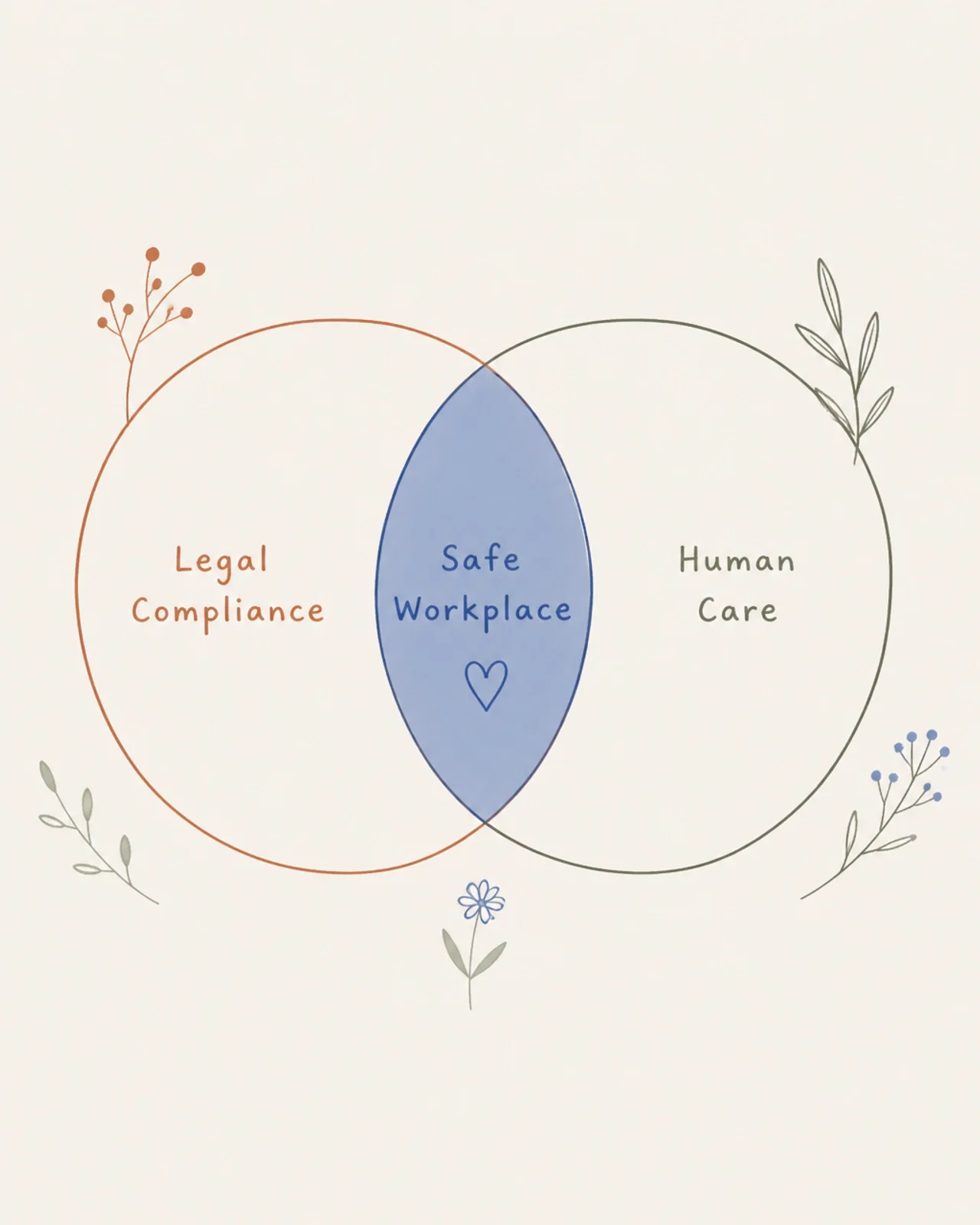
The Principles of a "Deep Breath" Training
When we designed the Compliance Training Suite, we leaned on the core principles of Embodied DEI. We believe that for training to truly "stick," it must address both the mind and the body.
Safety & Choice: We offer invitations, not commands. Participants are encouraged to take breaks, opt for different ways of engaging with the material, and stay connected to their own needs.
Trust over Urgency: We reject the "urgent panic" of compliance. We believe that sustainable change happens through practice over time, not through a one-off, high-pressure session.
Honesty about Power: We don't shy away from the difficult conversations about how power dynamics influence safety. We name them so we can navigate them together.

A Sustainable Journey Forward
This work isn't always easy, but it is deeply necessary. When you choose to bring a healing-centered lens to your compliance mandates, you are telling your team: "Your safety matters more to me than a checkmark on a form."
You are building a foundation of trust that will support your mission long after the training certificates are filed away.
This is just the beginning of our series on the Compliance Training Suite. In the coming weeks, we’ll dive deeper into the specifics of how to facilitate these conversations in a way that feels grounding and supportive for your specific organizational culture.
If you’re a leader or HR professional looking to move away from performative training and toward a culture of real belonging, we would love to partner with you. You can explore our consulting offerings or stay tuned here for more resources and conversation starters.
Thank you for the care and courage you bring to your workplace every day. We are so glad to be on this journey with you.
With warmth and solidarity,
The Inclusion School Team