7 Mistakes You’re Making with Culture Repair (and How to Fix Them)

I’ve been thinking a lot lately about what it means to truly "fix" a workplace. When a team is hurting, whether it’s from a specific conflict, a period of high turnover, or a slow erosion of trust, there’s a natural, very human instinct to want to patch things up as quickly as possible. We want the tension to go away. We want to get back to the mission.
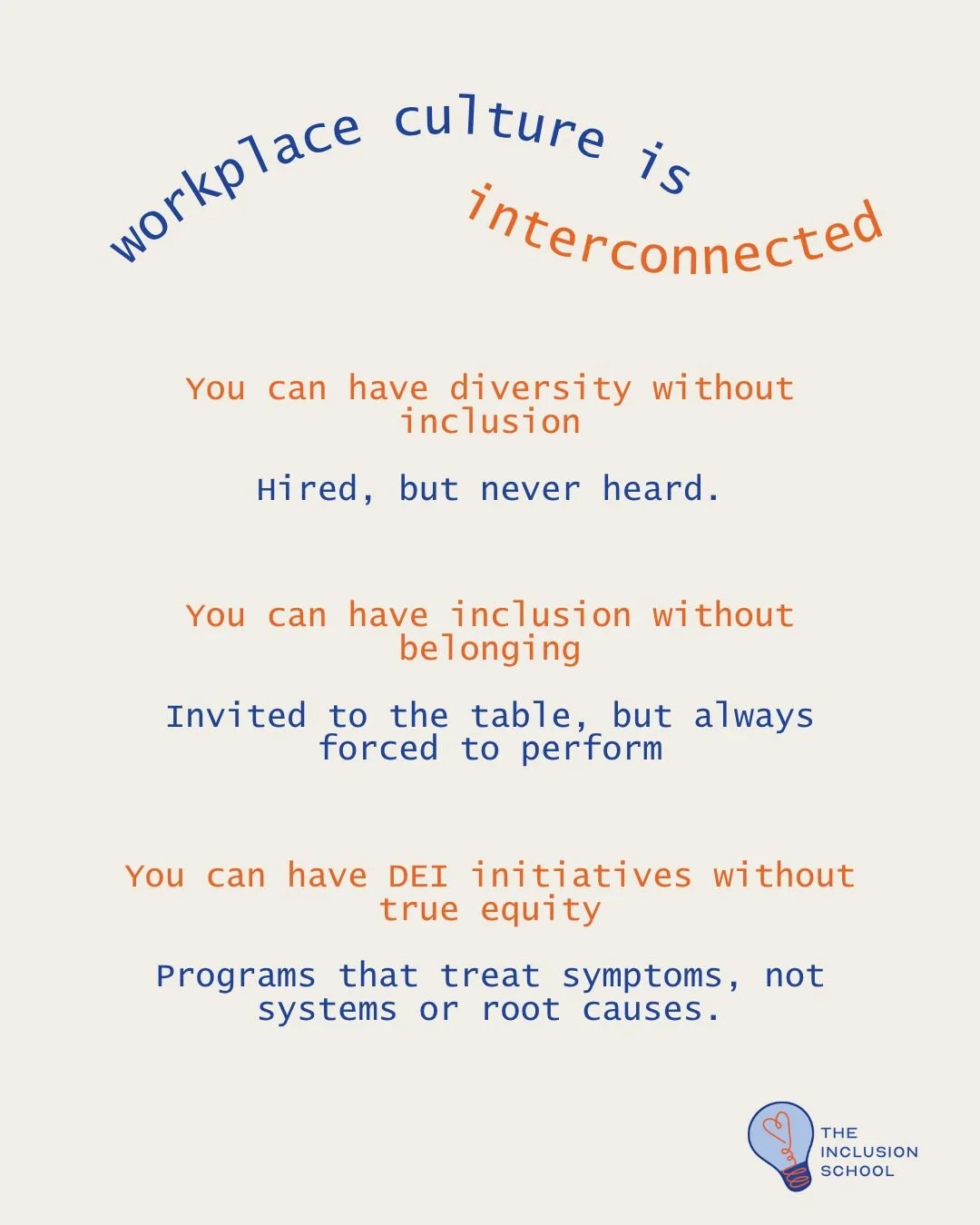
But here’s something I’ve learned through our work at The Inclusion School: culture repair isn’t about patching things up quickly. It’s about tending to the soil and addressing the root issues.
When organizations approach us for culture repair services, they’re often at a breaking point. They’ve tried the standard HR checklists, and yet, the underlying heaviness remains. I want to share some of the most common pitfalls I see leaders encounter. And this is not to criticize, but to offer a gentle invitation to look at these challenges through a different lens.
If you’ve found yourself making these mistakes, please know you’re not alone. This work isn't easy, but it is deeply necessary for creating a workplace people don't have to recover from.
1. Focusing on the "Optics" Instead of the Impact
It’s a common trap: prioritizing how the repair process looks to the outside world (or the board) over how it feels to the people inside. This often manifests as a polished internal memo or a "diversity statement" released before any real conversation has happened.
The Fix: Shift from performative to transformative. Before you publish anything, ask yourself: “Who is this for?” If the answer is anyone other than the people who were directly impacted, pause. Real repair starts with honest, private reflection and listening sessions. Our goal is to move beyond the checkbox and into the real, messy work of human connection.
2. Choosing Punishment Over Restoration
Traditional workplace discipline is almost always retributive: it asks, "What rule was broken, and how do we punish (or teach a lesson to) the person who broke it?" This rarely leads to healing or real behavior change. In fact, it often drives harm further underground, creating a culture of fear rather than care or accountability.
The Fix: Introduce restorative justice practices in the workplace. This framework asks different questions: "Who was harmed? What are their needs? And whose obligation is it to meet those needs?" By focusing on repair rather than punishment, you create a path for people to take genuine responsibility and for your workplace community to find a way forward together.
3. Let "Urgency Culture" Drive the Timeline
Repair doesn’t happen on a quarterly schedule. When we rush the process because we’re uncomfortable with the conflict, we end up cutting corners. We miss the nuances of what’s actually wrong, and the "fix" becomes just another source of stress for an already exhausted team.
The Fix: Practice "Sustainable Pace." Acknowledge that relationship and culture building is a long-term process. Tell your team: "We are committed to getting this right, not just getting it done." This creates a sense of psychological safety where people feel they have the space to breathe and process.
4. Excluding the People Most Impacted from co-creating the Solution
Sometimes, well-meaning leaders go into "fix-it" mode behind closed doors. They design new policies and programs without actually consulting the people who felt the harm in the first place. When the solution is top-down, it rarely addresses the actual pain points.
The Fix: Co-creation. Invite the team into the repair process. This doesn't mean putting the burden of "fixing" everything on those who were harmed, but rather creating safe containers where their voices guide the direction of the change. It’s possible to build trust through shared agency.

5. Treating Systemic Issues as "Individual Conflicts"
If three different people have left the same department in six months, it’s likely not just a "personality clash." When we treat cultural harm as a series of isolated incidents between individuals, we ignore the underlying power dynamics and systemic inequalities that allowed the harm to happen.
The Fix: Look at the root. Use a healing-centered lens to examine your systems. Are your promotion pathways transparent? Do your meeting structures favor certain voices? Is your workspace as inclusive as you think? Addressing the system is the only way to prevent the same harm from repeating.
6. Overlooking the Need for Reflective Leadership
You cannot lead a team through culture repair if you aren't willing to look at your own role in that culture. Leadership often feels like they need to be the "strong facilitators" of change, but true repair requires leaders to be vulnerable participants in change as well.
The Fix: Embodied Leadership. This is the practice of staying grounded and present even when conversations get difficult. It involves self-reflection on how you use your power and where you might have blind spots. It’s about moving from the "mind" into the "heart" of leadership.
7. Viewing Culture Repair as a "One-Off" Workshop
We love a good workshop, but a single session, no matter how powerful, isn't going to cure the issue or create a culture shift overnight. The mistake is thinking that once the "training" is over, the work is done. Culture is what happens in the 364 days between those workshops.
The Fix: Build long-term practices. At The Inclusion School, we focus on long-term partnerships because we know that lasting change happens through small, daily actions. It’s about creating "actionable agreements" that the team revisits regularly to see how they’re holding up in the real world.
A Gentle Path Forward
If you recognize your organization in these mistakes, take a deep breath. Realizing that the current approach isn’t working is actually the first step of repair. It’s an act of courage to say, "We want to do this differently."
We aren't looking for perfection; we’re looking for practice. We're looking for the collective courage to stay in the room with each other, even when it’s uncomfortable, and to believe that a healthier, more human workplace is possible.
If you’re feeling like your team needs a bit of grounding or a new way to approach these challenges, I’d love to chat. You don't have to carry the weight of culture repair alone.
With care and solidarity,
Chiany Dri
Founder, The Inclusion School