Juneteenth: Making a Home for Black Joy and Cultural Preservation at Work
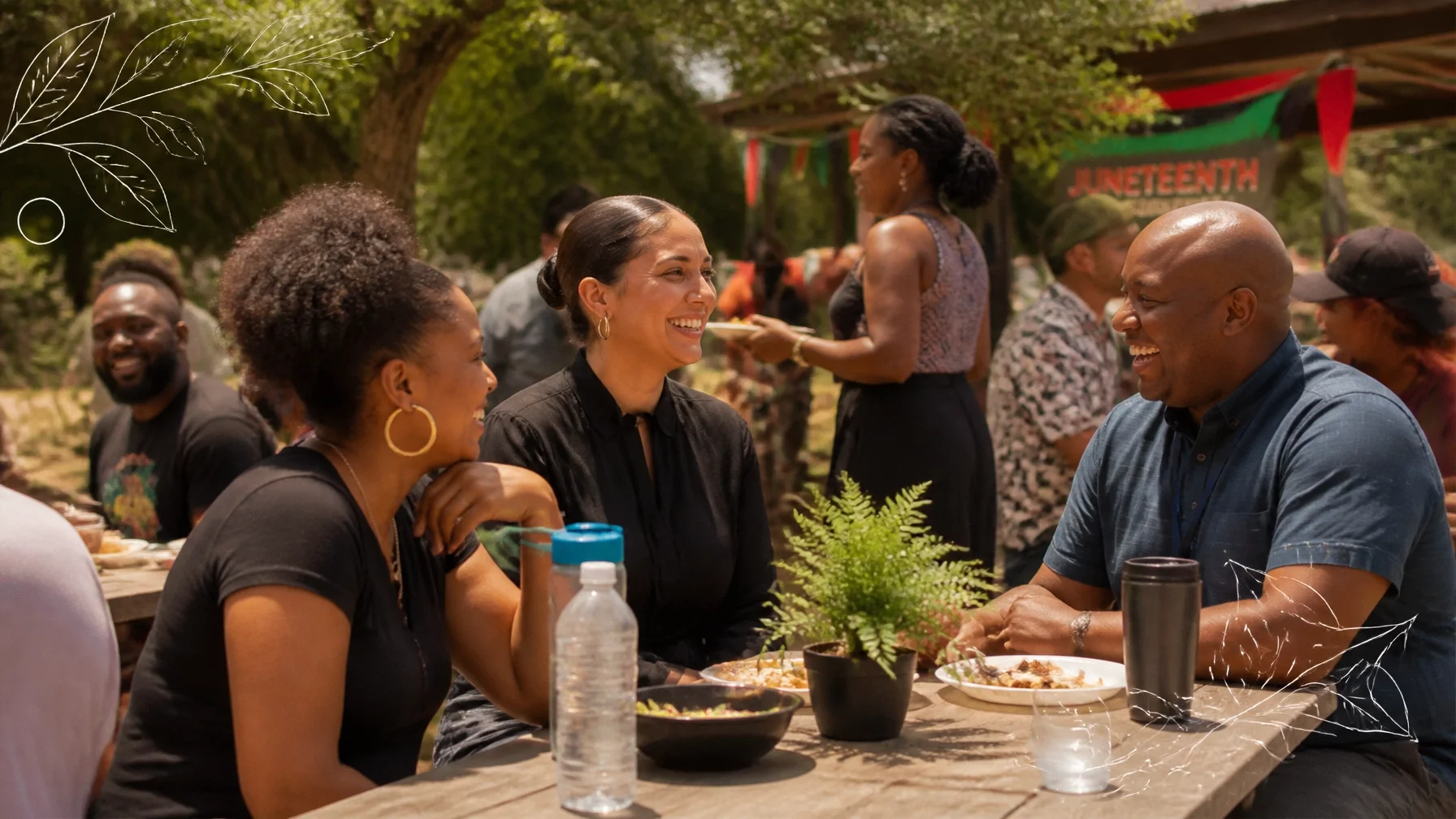
I’ve been reflecting on the weight and the warmth that Juneteenth carries. In our work here at The Inclusion School, we often talk about building "workplaces people don’t have to recover from." Usually, that conversation is about systems, policies, and psychological safety. But lately, I’ve been thinking about something just as vital but often more fragile and hard to sustain: Joy.
Juneteenth is a day with so much historical weight. It’s a reminder of the 250,000 enslaved people in Galveston, Texas, who were finally told they were free, two and a half years after the Emancipation Proclamation. It is a day that marks the end of legally sanctioned forced labor, but it also marks a beginning. It marks the moment Black communities took the scraps of a broken system and began to intentionally build a "home" for our culture, families, and happiness.
In the workplace, we often treat Juneteenth as a day off or a checkbox on a DEI calendar. If we look closer, Juneteenth is an invitation. It’s an invitation for leaders to ask: Are we just giving our team a day away from the hardship, or are we creating a culture where joy can actually live and exist freely?
Celebration as Cultural Preservation
For Black communities, celebration has never been "frivolous." It has always been a tool for survival and a method of preservation. When the world tries to strip away your humanity, choosing to laugh, to cook and eat together, to dance, and to rest is a radical act of keeping culture and spirit alive. It’s about giving that culture a home where it can breathe and grow.
When I facilitate culture repair workshops, I often see teams that are excellent at identifying "what’s wrong" but struggle to make space for "what feels good." Truthfully, though, culture isn't just preserved through policy; it’s preserved through shared joy and experiences of empowerment and camaraderie. At work, this means creating workplace belonging strategies that don't ask Black staff to leave their cultural expressions at the door, but to embrace them as part of who they are and what they bring to a workplace community.
The Reality Check: The Data Behind the Burnout
While we want to focus on joy, we cannot ignore the soil in which we are trying to plant it. To build real psychological safety at work, we have to be honest about the current landscape for Black professionals, especially Black women.
Recent data paints a stark picture of why "joy" can feel so out of reach:
The Advancement Gap: For every 100 men promoted to manager, only 60 Black women receive that same promotion. This "broken rung" at the very start of the leadership ladder leaves many talented Black women feeling stalled and undervalued.
The Economic Weight: Black women are still paid roughly two-thirds of what white men earn, even when they have the same education and experience. This isn't just a number; it’s a direct hit to the ability to rest and feel secure.
The Health of "Weathering": Black women in high-stress corporate environments report higher rates of burnout and physical health issues. The practice of suppressing your true thoughts and feelings just to survive the workday leads to serious mental and physical exhaustion.
The 2025 Labor Shift: Recent reports show that Black women have been disproportionately affected by job losses, accounting for over 54% of all job losses for women despite being a much smaller percentage of the workforce.
When the environment is this precarious, celebration can feel like a luxury or, worse, a performance. Many Black employees feel they have to celebrate through and despite the hardship. They are celebrating while wondering if their role is safe or if their pay will ever be equitable.
Shifting the Narrative: From Resistance to Respite
As a leader, you have a unique and beautiful power. You have the power to shift the narrative.
For too long, the "resilience" of Black employees has been praised, as if our ability to endure hardship is a professional skill. But we don't want a culture based on endurance. We’re tired of enduring, period. We want a culture based on respite.
People-centered leadership means moving beyond recognizing Juneteenth as a "resistance" holiday and moving toward creating conditions where joy can simply be about joy. It means your Black staff shouldn't have to be "resilient" just to make it to Friday.
Imagine a workplace where a Black woman doesn't have to use her weekend just to recover from the microaggressions of the week. Imagine if the workplace itself was a place where she felt safe, heard, and: dare I say: happy.

Invitations for a Healing-Centered Approach
So, how do we move from a once-a-year holiday to a year-round "home" for Black joy? I invite you to consider these three steps as conversation starters for your leadership team:
1. Fix the "Broken Rung" with Transparency
Joy is hard to find when you're constantly being skipped over. Look at your promotion data. If you see that Black women are not advancing at the same rate as their peers, don't just "note" it: fix it. Implement transparent promotion criteria and sponsorship programs. When people see a clear, fair path forward, it creates a sense of psychological safety that allows them to actually invest in the culture.
2. Move from Compliance to Connection
Our Race & Ethnicity Toolkit emphasizes that DEI isn't about avoiding a lawsuit; it’s about building a grove. Instead of one-off Juneteenth emails, create ongoing spaces for Black staff to connect, lead, and share their expertise without the pressure of "fixing" the company's diversity issues.’ Let them be actual partners in the organization’s growth, not just "diversity ambassadors."
3. Prioritize "Vocal Cord" Health
Stop asking Black staff to "tone it down" or "fit the mold." Encourage a culture where honesty is valued over perfectionism. When staff feel they don't have to "clip their vocal cords," their burnout levels drop, and their creative joy rises. This is the heart of healing-centered workplace interventions and it’s also at the heart of employees who are inspired to innovate and create toward the workplace mission.

A Journey of Practice, Not Perfection
Juneteenth is a reminder that freedom is a journey, not a destination. In the same way, creating a healthy workplace culture is a practice, not a one-time training.
This work isn't always easy, and it’s okay if you don't have all the answers yet. What matters is the commitment to move beyond the surface-level solutions. It’s about deciding that your organization will be a place where cultural preservation is welcomed, where data is used to create equity, and where Black joy isn't just an occasional guest, but is finally at home.
Stay grounded, stay curious, and let’s keep building.
With warmth and solidarity,
Chiany & The Inclusion School Team